


Solar PV for Apartments & Mixed-Use Developments: Procurement and Delivery Considerations
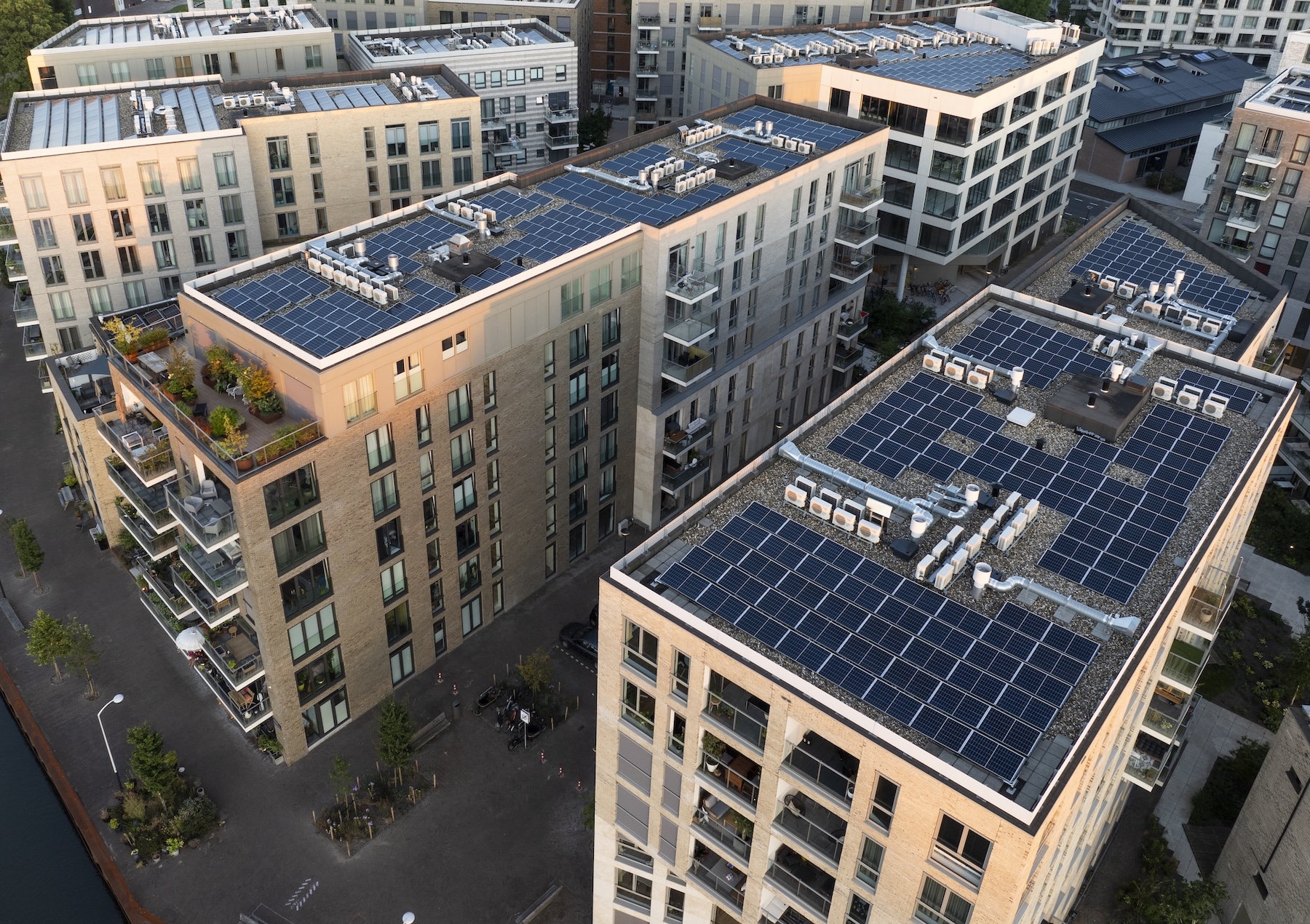
Solar photovoltaic panels (solar PV) are now a common feature on the roofs of many apartments and mixed-use developments in Ireland, but it is rarely a straightforward installation process. The complexity comes from shared energy loads, multiple electric meters, limited roof space, maintenance access and fire safety coordination, and the realities of handover to a building’s facilities management team.
This guide helps developers and the main contractors understand the key decisions, common pitfalls, and what to lock into the specification early to avoid delays, redesign and underperforming solar PV systems.
1. Start with the Commercial Model: Who Benefits from the Power
When planning a solar PV for apartment developments, it’s important to remember these projects are fundamentally different from detached and semi-detached home installations and require an entirely unique set of considerations. Instead of a single energy meter and owner for the building, you typically have landlord supplies for common areas alongside multiple tenant meters, each with different billing models. A solar PV metering strategy for apartments must decide how the power captured by the solar panels will be used and who will benefit from that energy long before works begin.
Using solar PV to offset landlord or common-area energy loads first, such as powering lifts, hall and common-area lighting and ventilation systems is often the simplest use case to design, meter, and manage. Tenant allocation models, where captured solar energy is shared across individual apartment units, can deliver a higher overall value, but it also requires more complex metering, contractual and operational planning. Export-led systems, which capture solar energy and sell it back to local utilities, usually provides the weakest business case for apartment developments, while pairing solar PV with battery storage leads to lower grid consumption and demands.
A major misconception is that the value added from solar PV is automatically significant, but that value depends entirely on the metering and usage plan. Poor alignment often results in systems exporting power while the building imports electricity at the same time. Deciding on the commercial and metering model for your apartment building early is the most important takeaway since it drives the solar PV system size, design, metering strategy, contracts and long-term operations and management responsibilities.
2. Design Constraints on Apartments: Roof Space, Shading, Access and Interfaces
Solar PV design options for apartments are often constrained by the rooftop. Apartment rooftops must accommodate multiple plant zones, lift and stair overruns, vents, safety setbacks, and other competing services. Without early coordination, solar PV could be relegated to whatever space is left after all of these other priorities are in progress. A roof’s shading and overall layout are also important considerations, as even partial shading from parapets can significantly reduce the amount of solar energy captured across a string of panels. These factors make having realistic yield assumptions essential, particularly on the kinds of taller or denser sites available for solar PV in mixed-use developments.
Access and maintenance must also be prioritised in those early design drafts, and teams will need to focus on providing safe access routes to panels, edge protection, unobstructed plant zones, and clearly located isolation points for both compliance and long-term maintenance purposes. Key interfaces that need early coordination include structure, waterproofing and roof penetrations, cable routes and risers, electrical rooms, and communications infrastructure for safe monitoring. A practical step at this point in the planning process is to require coordinated roof GA drawings and a clearly defined “PV zone” in the early design drafts.
3. Metering, Compliance and Fire Safety: The Stuff that Delays Jobs
The solar PV metering strategy for apartments should be prioritised early enough in the planning process to avoid commissioning delays. At a high level, solar PV metering options include installing a landlord meter focused on common areas and key building-wide utilities or sub-metering arrangements that allocate captured energy across multiple units as each approach comes with its own implications for billing, ownership and future flexibility. Installing solar PV on mixed-use developments adds further challenges, such as separate retail supplies, landlord distribution boards and phased tenant fit-outs. Decisions made late often require costly changes to risers, electrical room layouts or metering equipment.
Fire safety plans and emergency isolation of the panels are equally critical to secure at this stage. Clear labelling, accessible isolators, compliant signage, and official inclusion within the wider building fire strategy are requirements that must be understood by both construction teams and any of the building’s future operating teams. Common snag-list items that delay solar PV installations on apartment buildings include electrical rooms that are too small, unsuitable panel and energy monitoring, unclear communication provisions, and late changes to risers. The takeaway is to treat metering, isolation and legally compliant documentation as critical planning items, not optional extras on a solar PV procurement checklist.
4. Procurement & Delivery: What to Put in the Spec to Protect Performance
While making the solar PV procurement checklist, teams should agree on a target kilowatt-peak (kWp) maximum rated output for the panels, monitoring requirements for the landlord and residents, and a package of detailed documentation organised in a pack, quality assurance and testing procedures, and verified as-built drawings. Quality markers that matter include the mounting system standard, a cable management approach, compliant rooftop labelling, and appropriate inverter locations since these details directly impact safety, durability, and performance.
Warranties and responsibilities must also be explicit before the install and handover take place. Project leads and developers should distinguish between product warranties, workmanship warranties and performance guarantees, and clearly define who holds responsibility for each after the handover takes place. A common risk is value engineering that quietly kills output—cheap mounting systems, no monitoring, poor layouts and weak documentation. If you make clear and simple monitoring access and an detailed O&M plan contractual deliverables, not “nice to have” items.
5. Handover and O&M: Making Sure PV Actually Delivers After Practical Completion
Successful solar PV O&M requirements should be clearly communicated before the handover. Facilities management teams will need logins to monitoring platforms, clear user-friendly dashboards, maintenance schedules, recommended spare panels and parts, and a defined fault escalation path. Basic O&M activities will include periodic inspections, responding to monitoring alerts, inverter health checks and, when justified by conditions, some cleaning to ensure proper performance. Many underperforming solar PV systems suffer not from panel faults, but from a lack of clarity surrounding who is responsible for monitoring.
A simple, easy to follow O&M plan protects energy savings, avoids resident complaints and reduces unnecessary site call-outs.
Conclusion
When working with a commercial solar PV contractor in Ireland, the best results for apartments are achieved when installation is coordinated as early as possible, goals are clearly specified, and when a handover is made with monitoring and O&M already in place. For housing developers, the commercial upside to proper solar PV planning is fewer delays, cleaner compliance, and better long-term performance for owners and residents.
Solar PV systems on apartment and mixed-use developments succeed when the install is planned around the building’s metering and ownership model, coordinated early with clear roof access and a fire strategy, and specified properly with detailed monitoring and handover documentation. The benefits are clear: fewer delays, a clearer chain of responsibility, and stronger long-term performance.
If you’re planning a solar PV install for an upcoming apartment scheme, share your outline with our team today for a quick review of PV feasibility and advice on the metering approach and procurement specifications.
FAQs
1. What’s the best solar PV approach for apartment developments?
Often it’s PV feeding landlord/common-area loads first because it’s simplest to manage and avoids billing disputes. The right approach depends on the metering setup and who is meant to benefit.
2. Why is metering such a big issue for solar PV in apartments?Because apartments typically have multiple meters and shared services. If the metering strategy isn’t agreed early, you can end up with redesign, delays, or a system that exports power instead of offsetting building demand.
3. What should be included in a developer solar PV procurement spec?
It depends on whether PV feeds landlord/common loads, individual units, or exports to the grid. The key is agreeing the metering and benefit model early so billing and ownership are clear.
4. What are common issues seen at handover for solar PV systems?
Capacity targets, component standards, monitoring requirements, commissioning/as-built documentation, and clear warranty responsibility. Without these, performance and handover usually suffer.
5. Do solar PV systems on apartments need ongoing maintenance?
Yes, mainly monitoring, periodic inspections and planned maintenance. A basic O&M plan reduces fault call-outs and protects performance over the life of the asset.
To learn more, explore our commercial developments page or speak to our team about an upcoming clean energy project.