


How Does Solar PV In Ireland Work and Is It Worth It?
With rising electricity costs, home energy upgrades, EV charging and renewable energy always in the news these days, more Irish homeowners are considering residential solar panels than ever before. But how does solar energy actually work, and how well does it work in Ireland?
We’re here to answer those questions and help you understand how residential solar panels generate electricity, how much the average home solar panel can generate, and what happens if it’s not generating enough. Read on to discover everything you need to know before deciding if residential solar panel installation is a good option for your home.
What Is Solar PV?
Unlike solar thermal, which uses the sun’s energy to heat water, solar PV uses photovoltaic technology in panels to convert light directly into electrical energy. In simple terms, solar panels turn the energy contained in sunlight into electricity. And when it comes to considering installing residential solar panels in Ireland or other similarly temperate climates, you don’t need hot weather or constant sunshine for it to work. In fact, Ireland’s climate is ideal in many ways since modern panels rely on daylight rather than direct, intense sunshine. Solar panels are electronics that lose efficiency when they overheat, and our mild weather keeps them running at their peak operating temperature.
Installing solar panels in Ireland is a great step towards making your home more energy efficient, using more renewable energy and reducing your reliance on electricity from the grid. It can also work alongside other upgrades, such as an EV charger or home battery, to help you make even more use of the electricity you generate yourself.
How Do Residential Solar Panels In Ireland Work?
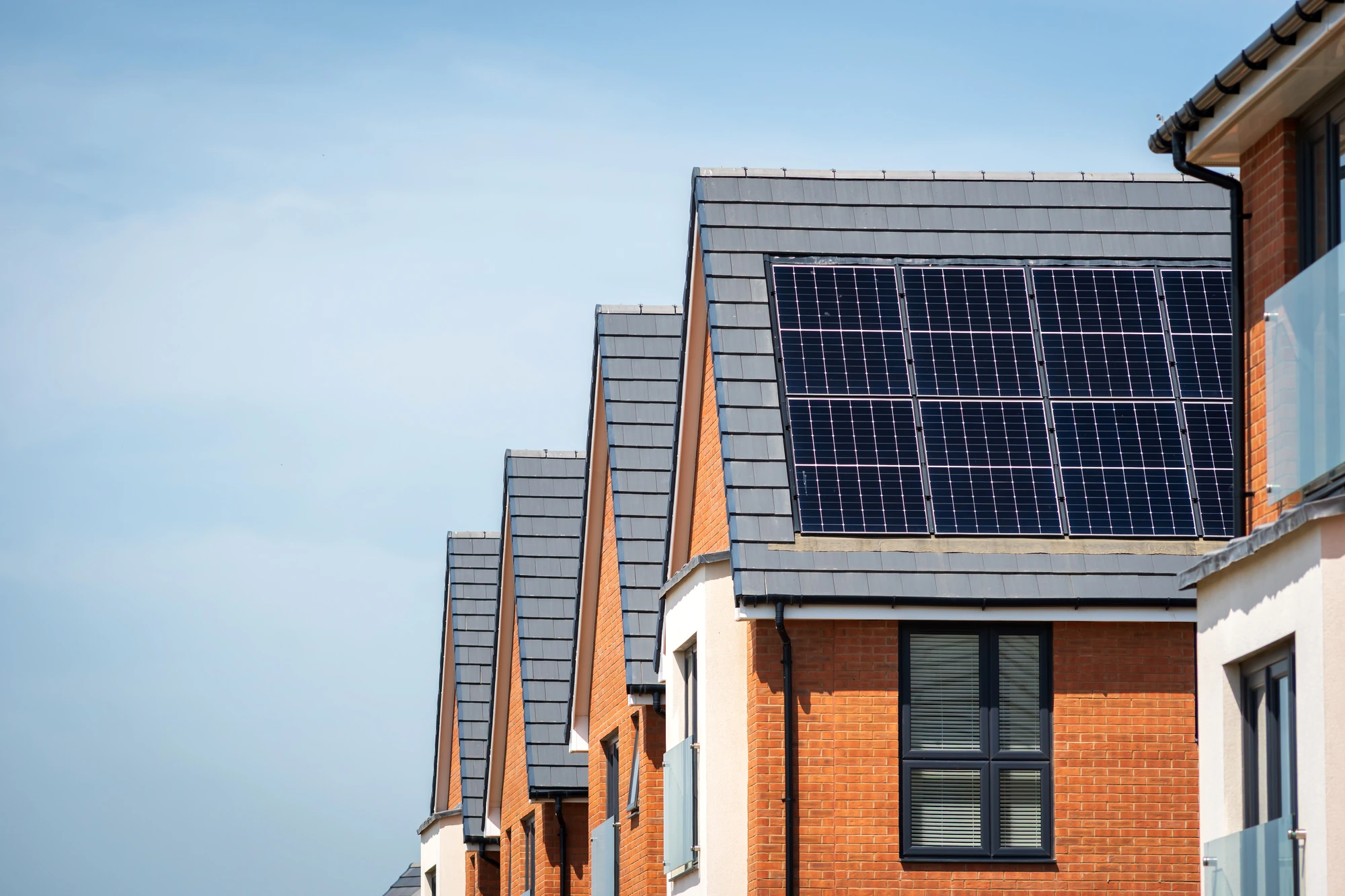
So, how do solar panels work once they’re installed? During daylight hours, light hits the panels on your roof and generates direct current (DC) electricity. An inverter then converts this into alternating current (AC) electricity, which is the type your home uses.
From there, the electricity generated will be used in your home first. It could power the lighting, fridge, washing machine, or other appliances. If your residential solar panels generate more electricity than you need at that moment, the surplus may be stored in a home battery or exported to the grid, depending on the system you have.
A typical solar PV system includes:
Solar panels, which generate the electricity
An inverter, which converts it into electricity your home can use
A mounting system, which securely fixes the panels to your roof
A monitoring system or app, which lets you see how much electricity you’re generating and using
An optional battery, which can store surplus electricity for later
An optional EV charger, which can help you make use of your own generated electricity when charging your car
How much electricity your solar PV system generates will change throughout the year. Irish weather won’t keep your panels from working, but the amount of daylight and cloud cover will impact their output. Because solar panels convert light into electricity, brighter, longer days generally mean more energy generation, while output is lower during the shorter, darker days of winter.
How much of the generated electricity you use yourself largely depends on your routine. If someone is at home during the day and runs appliances while the panels are generating, they may use more of their solar electricity directly. If the house is empty until the evening, more of that generation may need to be stored or exported.
So, when you’re thinking about how residential solar panels could work for your home, it’s not just about how much electricity your solar PV system generates. It’s also about when that electricity is generated and how that fits with the typical schedule and way you use energy each day.
Is Solar PV Worth Installing In Ireland?
For many homes, solar PV can be a really worthwhile investment, but the value you get from it will depend on your home, your energy use and the system you choose. There are a few factors that will help determine whether it’s a good fit for you.
For a start, the size and direction of your roof will affect how much electricity the panels can generate, and trees, buildings or other shading can reduce their output if they restrict the amount of light that hits them. It also depends on when you use electricity. If people are at home during the day, for example, you’re more likely to use the electricity as it’s being generated, whereas if everyone is out until evening, more of that electricity may need to be stored or exported to the grid. Electricity prices, the cost of installation and any payments available for electricity you export to the grid can also affect the overall value of a system.
It’s worth remembering that the biggest system isn’t necessarily the best one. The right setup is one that suits your home and how you actually use energy. For example, a household that uses a lot of electricity during the day may be able to make more direct use of its generation than a home that is empty until the evening.
Solar panels in Ireland can also form part of a wider plan to improve your home’s energy efficiency. If you’re already thinking about a heat pump, battery, EV charger or other retrofit work, it may make sense to consider how these technologies could work together.
So, while generating solar energy isn’t a magic fix for every home’s energy needs, it can be a practical way to reduce your reliance on electricity from the grid and make greater use of renewable energy. For suitable properties, it can make a great first step in a broader approach to improving how your home uses energy.
What Should Homeowners Check Before Scheduling Solar Panel Installation?
Before you go ahead with solar panel installation in Ireland, there are a few things worth checking at home.
Start with the roof. Is it in good condition, and does it have enough suitable space for the amount of residential solar panels you need? The direction your roof faces will affect how much electricity it can generate, while shading from trees, chimneys or nearby buildings could reduce output.
Think about how you use electricity. How much electricity does your household use, and when are you using it? If you’re home during the day, you should be able to use more of your solar energy as it’s generated. Adding a solar battery could help you store surplus electricity for later, and an EV charger could give you another way to use it for those with electric vehicles. If you’re planning to install a heat pump or make other residential energy upgrades in the future, it’s worth factoring these into your plans, too.
You should also check whether there are any planning requirements or restrictions linked to your property before you get started.
Don’t rely on an online calculator alone. These tools can give you a rough idea of what solar might look like for your home, but they can’t see the condition of your roof, the shading around your property or how your household actually uses electricity. They also won’t take your future plans into account.
That’s where NetZero Group’s site assessment comes in. We’ll look at your roof, how your home uses energy and any plans you have for future upgrades, helping to work out what solar PV system will suit your home. Rather than relying on a generic estimate, you’ll have a recommendation based on your property, your energy needs and how you want to use the electricity you generate.
And it doesn’t have to be considered on its own. With experience across residential solar panel installation, retrofit, heat pumps, ventilation, controls and other home energy upgrades, our expert team can help you look at the bigger picture and plan how these technologies could work together.
Ready to Find Out If Solar Panels Could Work For Your Home?
Solar PV is a straightforward way to turn daylight into electricity, and for many Irish homes, it can be a practical way to use more renewable energy and reduce reliance on the grid. But whether it’s right for your home will depend on a few things, from the condition and direction of your roof to how much electricity you use and when you use it. Your plans for a battery, EV charger, heat pump or other home upgrades may also influence the system that makes sense for you.
NetZero Group can assess your property’s current BER and energy needs, and help you understand how solar could deliver energy benefits for your home.
Want to learn more about residential solar panel installation in Ireland? Arrange an assessment with NetZero Group today and find out how solar panels could work for your home.
FAQs
Solar PV panels convert daylight into electricity. An inverter then converts this from direct current (DC) to alternating current (AC) so it can be used in the home.
Yes. Solar panels work from daylight, not just direct sunshine. They usually generate less electricity on cloudy days, but they can still produce power.
Solar PV can be worth it for many Irish homes, but it depends on the roof, electricity usage, installation cost and how much of the generated electricity is used in the home.
Not always. A battery may help some households use more of their solar electricity, but it adds cost and should be assessed based on the home’s usage pattern.
Solar panels can help supply some of the electricity a heat pump uses, but solar generates most in summer, when heating demand is lowest. Designing both systems together, with the right panel size, controls and possibly a battery, helps you make the most of your solar electricity.
Solar panels are generally designed to last for at least 20 years, but warranties, inverter lifespan and maintenance requirements should be checked before installation.
Homeowners should check roof suitability, shading, electricity usage, battery options, future EV or heat pump plans and whether the system is correctly sized.